
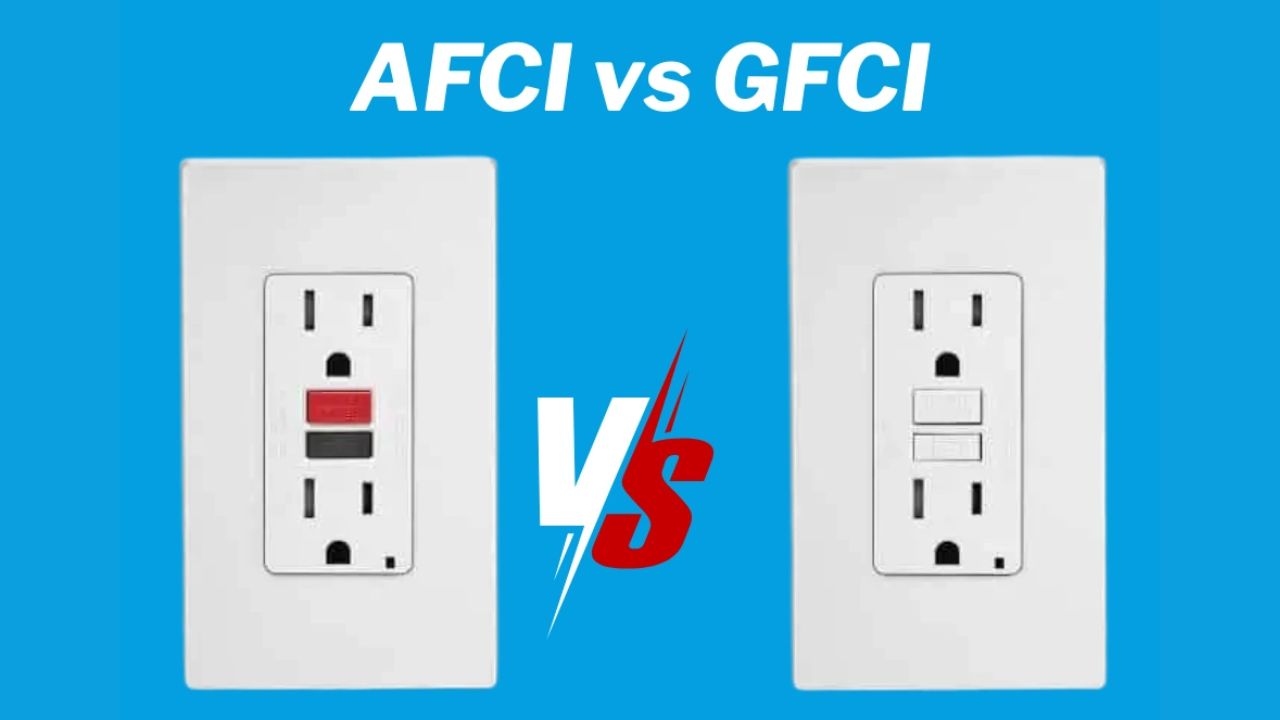
AFCI and GFCI are other terms that can confuse a homeowner as far as home electrical safety is concerned. Although they might read like technical jargon, it is vital to know how to use these machines to save human life and property. The afci vs gfci Circuit Interrupter and GFCI or Ground Fault Circuit Interrupter are not needed at all in a modern home, and their functions are fundamentally different. The awareness of the distinction can guide homeowners to make sound decisions on the location and the manner in which they should be installed.
Understanding GFCI Protection for People
A GFCI is developed to avoid electrical shocks, especially in places where water exists. Water and electricity are unfriendly companions, and even a minor electrical leakage may cause fatality. The GFCI continuously measures the current flowing through a circuit and identifies any imbalance that might be due to leakage of current to the ground. The power is disconnected in milliseconds when a ground fault is detected, avoiding severe injury or death.
Testing and Maintaining Your AFCI and GFCI Devices
Testing and maintenance are important regularly in order to make sure that AFCI and GFCI devices operate correctly. GFCI outlets are to be tested monthly by homeowners by pushing the “TEST” button and ensuring that the power is switched off, and then resetting the button to normal operation. The electrical panel has AFCI breakers, which also have a test button that ought to be periodically tested to ensure that they react to simulated faults. By maintaining these checks, one is able to check on possible issues before they escalate to serious hazards, so as to have uninterrupted security of people and property.
Understanding AFCI Protection for Property
Whereas GFCI saves human lives, AFCI saves property. An Arc-Fault Circuit Interrupter is the device used to monitor dangerous arcs in the wiring of the house. Arc faults are the result of electricity leaping between a broken or frayed wire, causing sparks, which in turn can ignite adjacent material like wood, insulation, or dust. The sparks may become very hot and lead to fire in houses even before the homeowners realize that there is a problem. AFCIs are common across the home, usually attached at the origin of a circuit in the main electrical panel, and they monitor the circuit throughout the house.
Key Differences Between AFCI and GFCI
The difference between AFCI and GFCI may be reduced to the following: the former is aimed at protecting people, the latter at protecting property. GFCIs respond to ground faults and are used in moisture-prone locations to avoid shocks. To avoid fires, AFCIs are used to identify arc faults that are usually concealed within the walls or in frayed cords. Although these two devices have the effect of breaking the flow of electricity to mitigate the risk, they react to completely different hazards.
It is important to know where this equipment should be installed. GFCIs should be installed in kitchens, bathrooms, laundry, garages, and outdoors. The bedrooms, living rooms, hallways, and other living spaces that may have electrical wiring hidden and which can easily wear out should have AFCIs. There are places that cost both AFCI and GFCI protection, e.g., laundry rooms and basements, since they have a risk of fire, and the risk of shock.
Choosing the Right Protection for Your Home
In the case of modern houses, AFCI and GFCI devices are necessary. The consumers who are not sure whether their homes are adequately equipped should contact a licensed electrician. Professionals will be able to test the wiring, define the right places where these devices will be placed, and either install dedicated circuit breakers or outlet-based solutions. Dual-purpose AFCI/GFCI products are also in the market, which offer all-purpose protection in locations where arc and ground faults are likely to occur.
Knowing the distinctions between AFCI and GFCI, homeowners are able to make appropriate decisions that minimize losses of human beings and property. A GFCI is a personal protection against electrical shocks, whereas an AFCI is a protection guard against fire. The combination makes a complete safety system, which fulfills the modern standards in the electrical industry and guarantees the peace of mind of every household.
Conclusion
Electrical safety is not a technical form of requirement; it is a crucial point in saving life and property. The AFCIs and the GFCIs are complementary components in the electrical system of a house. It is also important to separate them and install them properly to avoid shocks and fires. Consulting with the specialists and installing the appropriate equipment in the appropriate positions, the owners of houses will be able to provide safer conditions in their place of residence and experience the tranquility in its full glory.